Pull up Kensington's median sale price on three national portals this spring and you get three different stories. Redfin put January 2026 at roughly $690,000. Zillow's average home value read about $789,000. Movoto's March 2026 median came in at $1.2 million, and one local MLS feed showed a median list of $992,000 as of mid-May.
Same ZIP code, same month, half a million dollars of daylight between the numbers. That spread is not a data error. It is the single most useful signal about how this market actually works, and it points to the friction that catches most buyers and sellers off guard: in the Kensington Historic District, the review process does not slow the sale. It slows the renovation you were planning to do after closing, and that changes what a house is actually worth to you the moment you write the offer.
Three portals, three medians, one bimodal market
| Source | Window | Figure | What it is capturing |
|---|---|---|---|
| Redfin | Jan 2026 | $690,000 median sale | Smaller sold set skewed toward older, unrenovated stock |
| Zillow | Rolling 12-mo | $789,345 average value | Blended Zestimate across all housing types |
| Homes.com | Spring 2026 | ~$1,016,597 average list | Weighted toward active listings including new construction |
| Movoto | Mar 2026 | $1,200,000 median sale | Sold set skewed toward larger, renovated homes |
| Koitz Group MLS pull | May 11, 2026 | $992,000 median list | Live inventory, all Kensington |
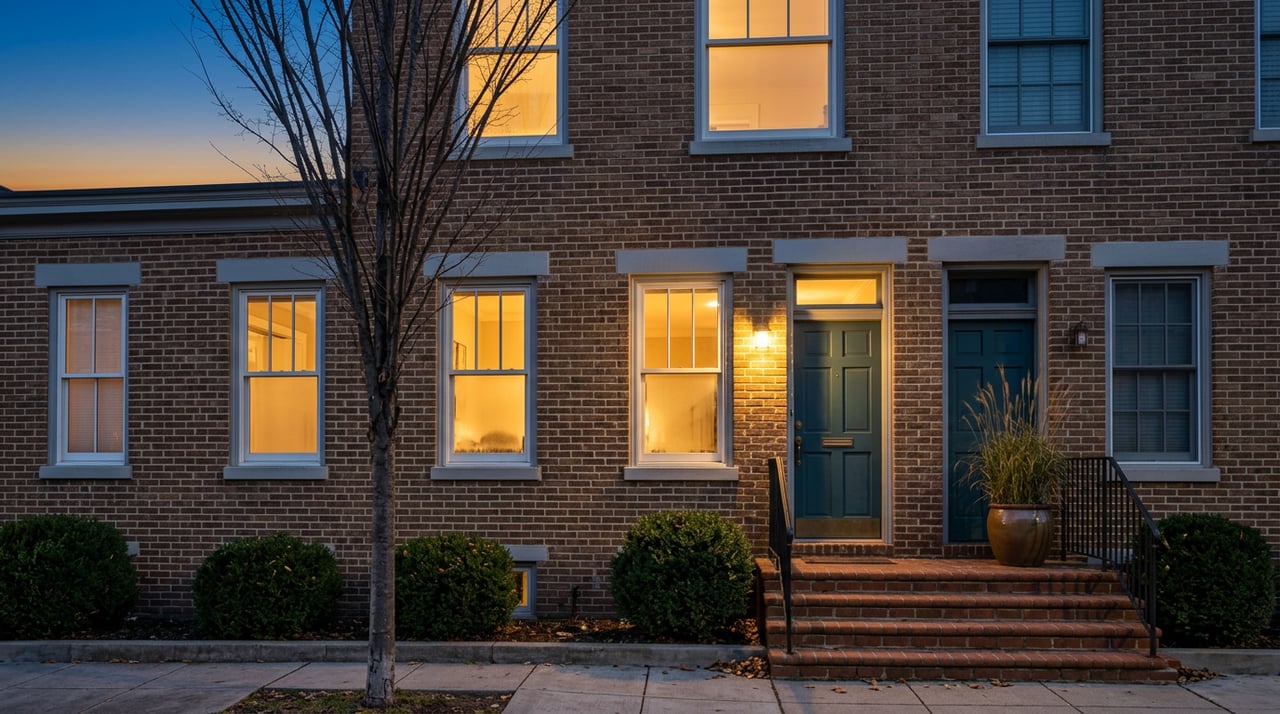
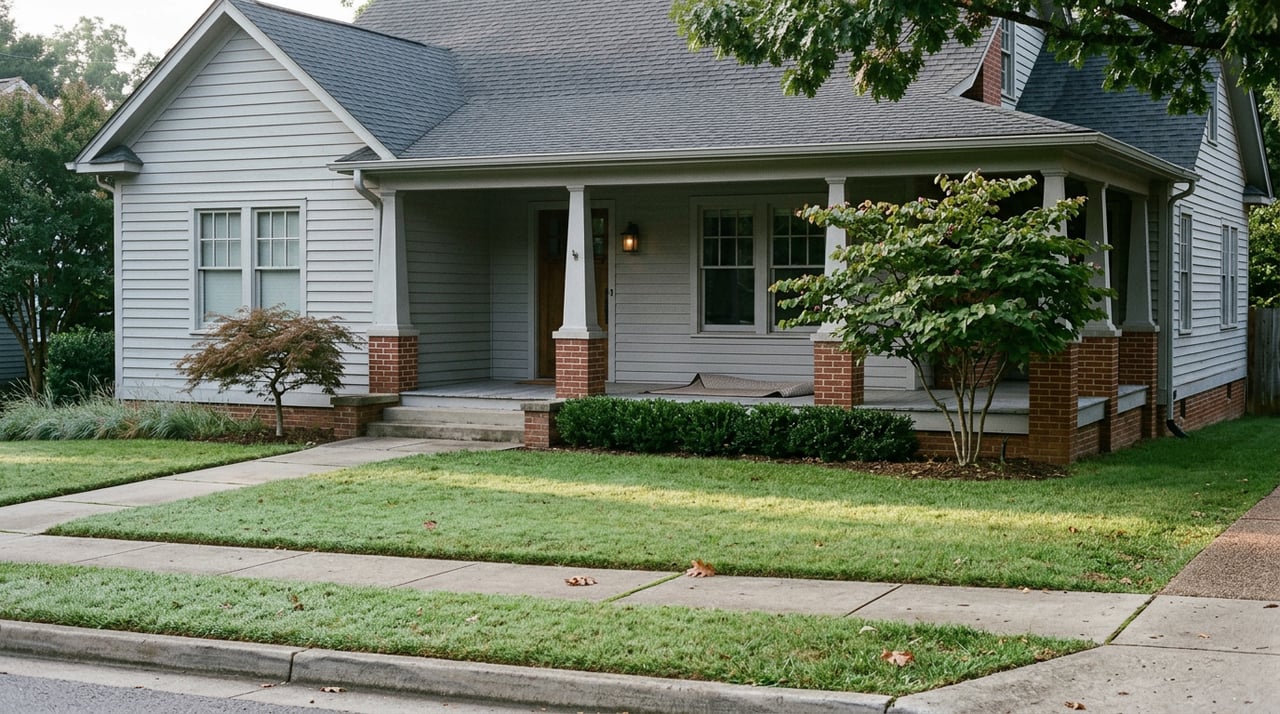
The reason those numbers do not agree is that "Kensington" contains at least two very different transactions. The Town of Kensington is a half-square-mile Victorian core chartered in 1894, filled with 1890s to 1920s Queen Anne, Shingle, Eastlake, and Colonial Revival homes on modest lots. Wrapped around it are Rock Creek Hills, Parkwood, Kensington Heights, Homewood, Byeforde, and Ken-Gar, where the housing shifts to mid-century colonials, splits, and ramblers on larger, tree-covered lots. South Kensington has become a hotbed of infill, with new custom homes starting near $1.5 million on postage-stamp lots.
A portal median blends those groups into one number. Your transaction will not.
The dual-review layer, translated into transaction time
Any exterior change to a home inside the historic district needs a Historic Area Work Permit issued by Montgomery County's Historic Preservation Commission before a building permit can be released. That includes changes you cannot see from the street. New construction, grading, and removing live trees also require a HAWP, per Chapter 24A of the county code.
Then the Town of Kensington adds its own review on top. The Town Manager reviews and approves all local permit applications separately, and Kensington's own code sets a 10-foot minimum side yard for single-family homes and 15 feet between dwellings, which is tighter than the county zoning envelope on many small lots.
Here is the sequence the way it actually plays out for an exterior renovation after closing:
- Pre-application conversation with HPC staff at 2425 Reedie Drive in Wheaton. Staff will tell you before you spend a dollar on drawings whether the concept has a path.
- HAWP application filed with the Department of Permitting Services. The HPC's statutory clock is 45 days.
- HPC public hearing and decision, usually inside the 45-day window.
- Town of Kensington review by the Town Manager.
- Building permits issued by county DPS.
- Construction.
The 45-day HPC cap is real. The practical calendar is longer. Architects who take Kensington projects through this process routinely tell clients to add six to eight weeks to their schedule for the dual-layer review, largely because the Town's parallel review sits on top of the county process rather than folding into it.
For a buyer, that time cost is not academic. If you are underwriting a $900,000 Victorian on Baltimore Street with $250,000 of exterior work in mind, the HAWP calendar is part of your carrying cost. For a seller, it means the renovation you did not have time to finish before listing is worth less to a buyer than the same renovation completed, because the buyer is pricing in the review.
"Primary resource" is the phrase that changes your offer
Not every home in the historic district carries the same weight under review. The HPC classifies structures as primary or secondary resources, and the majority of houses along Baltimore Street are primary. Board of Appeals testimony has described primary resources as the most significant type of resource in the Town, subject to the strictest level of review.
There is a rhythm the HPC is actively protecting, referenced in the Vision of Kensington preservation plan: house, lot, house, lot. Most historic-district homes sit on two or three original subdivision lots, which is why the streetscape looks the way it does. That rhythm is why lot splits, teardowns, and out-of-scale additions are difficult conversations with the Commission and why, in the well-known 1997 case at 3922 Baltimore Street, discussions about a single infill home ran for years before the HPC allowed construction.
For a buyer, the offer strategy diverges here. On a secondary resource on a side street, an addition to the rear is usually approvable if it is subordinate and compatible. On a primary resource on Baltimore Street, the same addition may need to be redesigned twice before it clears review. Confirm the classification before you write the offer, not after inspection.
Where Compass Concierge dollars actually go in the historic core
The most useful line in the entire ordinance, from a seller's perspective, is the one that tells you what is exempt from review. Ordinary maintenance to the exterior is not a HAWP trigger when it uses the same materials in replacement. Interior work is generally outside HAWP jurisdiction entirely.
That maps directly onto the pre-list work that moves the needle without adding review time:
- Repainting non-masonry surfaces
- Roof, gutter, and trim repair or replacement with matching materials
- Repaving an existing driveway with matching materials
- Interior kitchen and bath work, mechanical and electrical upgrades, insulation, air sealing
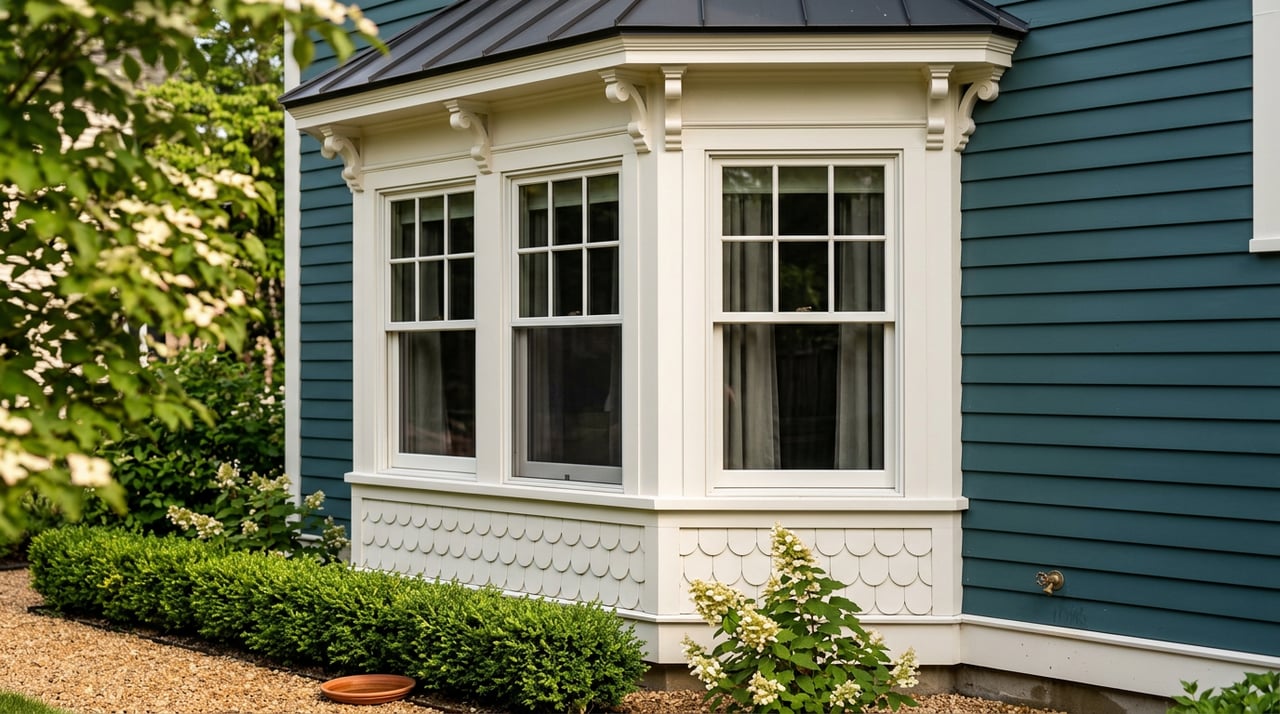
- Restoring original sash and adding interior storm windows rather than replacing windows outright
That list is where a Compass Concierge budget earns its return in Kensington. Kitchens and baths in these Victorians tend to be small, closed off, and original; the mechanicals are often past useful life. None of that needs HPC sign-off. A pre-list interior refresh plus exempt exterior maintenance is the fastest and lowest-friction path to a stronger listing photo set and a shorter time on market.
Where sellers get into trouble is deciding, three weeks before listing, to swap wood siding for vinyl, change a window opening, or add a fence taller than what is there. Any of those triggers a HAWP and can push a spring listing into summer.
The tax-credit lever most buyers underwrite past zero
Maryland offers a 20 percent state income tax deduction for approved rehabilitation work of at least $5,000 in expenditures over a two-year period on properties in locally designated historic districts, on the Maryland Historical Trust register, or on the National Register. Kensington's historic district qualifies. The deduction applies to interior and exterior structural and mechanical work when it is done to the preservation standards.
That is a meaningful lever for a buyer taking on a dated primary resource. On $150,000 of qualifying rehabilitation, the state deduction is worth $30,000 in taxable income. It does not appear on a Zestimate. It should appear in your buy-side math.
What this actually means for a 2026 Kensington transaction
The dual-review process is a renovation constraint, not a sale constraint. Homes on the market in April 2026 were selling in a median of 19 to 20 days per the local feeds, and well-prepared listings in the $700,000 to $1 million band tend to move fastest. The market is not slow. What it is, at every price point in the historic district, is a market where the buyer's five-year plan for the house matters more than the sticker price.
If you are selling in the core, the plays are interior work, exempt exterior maintenance, and disclosure of whether the property is a primary or secondary resource so the buyer's offer can be priced accurately. If you are buying, confirm classification, budget the six to eight weeks the dual review adds, and put the Maryland rehabilitation deduction into your underwriting.
FAQ
Does buying in the historic district affect resale?
The stock inside the district is scarcity-protected by the ordinance, which is one reason the Victorian core anchors the top of the portal medians. The tradeoff is renovation flexibility, not exit liquidity.
Do I need a HAWP to replace my roof?
Not if the replacement matches existing materials. Repairing or replacing a roof with the same material is defined as ordinary maintenance and is exempt. A change in material or profile is a different conversation.
How do I find out if a specific address is a primary or secondary resource?
The Vision of Kensington plan and the district's Master Plan amendment identify resource classifications. The Historic Preservation Office at 301-563-3400 can confirm status by address before you write an offer.
Kensington rewards the buyer who reads the ordinance before the listing sheet and the seller who spends the pre-list dollar where the review process cannot reach it. If you are weighing either side of a transaction in the historic district or the streets around it, the team at The Foley Group of Compass can walk your specific address through what the review layer will and will not do to your timeline. Start with a free home valuation or browse current Kensington homes for sale.