Choosing between Riverdale and Hyattsville can feel tricky when both put you close to Washington, D.C. and offer strong everyday convenience. If you are weighing commute time, housing options, and the kind of routine you want once the workday ends, the differences start to matter quickly. The good news is that each area has a distinct rhythm, and understanding that can help you narrow your search with more confidence. Let’s dive in.
Commute Access in Riverdale and Hyattsville
For many buyers, the biggest difference comes down to how you want to commute. Riverdale is more closely tied to MARC service, while Hyattsville offers more frequent Metro access and more transit connections for day-to-day trips.
Riverdale’s standout transit feature is the Riverdale Park Town Center MARC stop on the Camden Line. MTA lists the station at 6200 Rhode Island Avenue, and the current timetable includes a 6:05 PM departure that arrives at Union Station at 6:28 PM, which is a 23-minute ride. The station also includes parking and Route 14 bus service.
That bus connection matters. Route 14 links Hyattsville Crossing, Riverdale neighborhoods, the Riverdale MARC station, Riverdale Park Town Center, and the College Park Metrorail station, which makes Riverdale more of a bus-and-rail connector than a one-stop transit story.
Hyattsville, by contrast, is more Metro-oriented. The city has two WMATA stations within city limits, Hyattsville Crossing and West Hyattsville, both on the Green and Yellow lines, and the city notes that some Washington, D.C. neighborhoods are less than a ten-minute ride away. The same city transportation page also highlights more than a dozen bus routes and a Call-A-Bus service.
If you want practical everyday flexibility, Hyattsville has the edge. According to the city, both Metro stations offer features like parking, bike racks, lockers, and Wi-Fi, which can make commuting and errands easier without relying as much on a car.
Who Each Commute Fits Best
If your priority is a direct ride to Union Station and a quieter station-area feel, Riverdale may be the better match. If you want more frequent rail service, more station options, and more ways to connect your commute with errands or social plans, Hyattsville may feel easier to use every day.
Daily Lifestyle and Walkability
Commute is only part of the decision. Your experience of a neighborhood often comes down to what you can do close to home, whether that means walking to a coffee shop, biking to a trail, or spending weekends in nearby parks.
Walk Score rates Riverdale Park at 66, which it describes as Somewhat Walkable and Very Bikeable. The same source notes a five-minute walk to the Riverdale MARC stop and highlights nearby parks such as Riverdale Neighborhood Park, Riverdale Recreation Center, and Arts District Hyattsville West Playground.
Hyattsville scores a bit higher on the same scale, with a walk score of 69, a Transit Score of 55, and a Bike Score of 73. Walk Score also estimates about 98 restaurants, bars, and coffee shops in the city, along with about 10 bus lines and one subway line nearby.
That difference helps explain the feel of each place. Hyattsville tends to offer a more amenity-rich day-to-day environment, while Riverdale often feels more tied to open space, civic landmarks, and a quieter town-center pattern.
Riverdale’s Everyday Feel
Riverdale’s lifestyle is shaped by local institutions and green space. The Riversdale House Museum is a notable cultural anchor, with gardens, bike racks, picnic tables, and parking on site.
That setting pairs with a broader park-centered identity. Rather than revolving around a dense restaurant corridor, Riverdale often appeals to buyers who want a close-in location with more breathing room and an easier connection to trails and larger outdoor spaces.
Hyattsville’s Everyday Feel
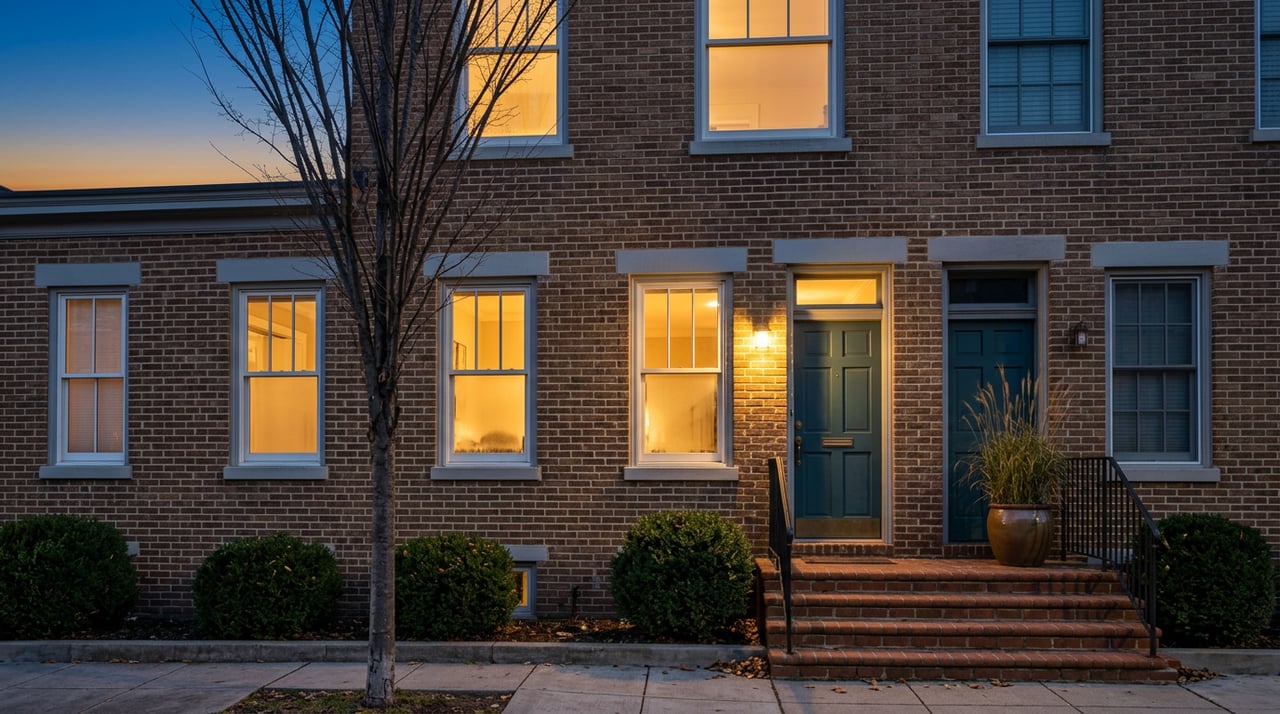
Hyattsville offers a more mixed built environment and a broader range of nearby services. The city’s housing overview describes a mix of apartment complexes, historic houses, and townhome communities, which lines up with the varied streetscape you see across the city.
Its park system also supports an active routine. The city highlights places like Driskell Park, Melrose Park, McClanahan Park, and University Hills Duck Pond Park, creating a network of parks and trail connections spread across different parts of the city.
Parks, Trails, and Outdoor Time
If outdoor access is high on your list, both areas deliver, but in different ways. Riverdale leans into larger open-space assets, while Hyattsville offers a denser web of neighborhood parks and trail links.
Riverdale Park includes a 36.32-acre county park with baseball and softball fields, basketball courts, a dog park, pickleball courts, picnic tables, trail access, and a hard-surface trail. Nearby, Anacostia River Stream Valley Park at Tanglewood Drive spans 530.03 acres and includes trail access, picnic shelters, playground equipment, and broad river-valley open space.
That is a meaningful advantage if you want bigger recreational areas nearby. Buyers who prioritize longer walks, biking, or more room for outdoor time often notice Riverdale’s larger-scale park resources quickly.
Hyattsville’s park network works differently. The city’s David C. Driskell Community Park page notes that Driskell Park covers 32 acres and includes a recreation center, playing fields, courts, pavilions, and walking and biking paths.
Other Hyattsville parks help fill in the map. Melrose Park connects to the Northwest Branch Trail, and University Hills Duck Pond Park connects to the Northwest Branch trail system along the Anacostia River, giving the city a more distributed, neighborhood-connected outdoor feel.
The Shared Trail Corridor
One of the most useful points for buyers is that these two places are not isolated from one another. Riverdale Park’s capital budget describes trail lighting between Hyattsville to the south and College Park to the north, and the county has also described the Trolley Trail as linking the two communities through a larger active-living corridor.
In real life, that means you are looking at a connected Riverdale-Hyattsville-College Park zone for biking and walking. If you want outdoor access built into your routine, both places support that goal.
Housing Stock and Price Bands
The two areas also differ in what you are most likely to find on the market. Riverdale has a somewhat more detached-home-leaning profile, while Hyattsville has a broader mix with a larger multifamily component.
In February 2026, 20737 had a median sale price of $422,500, down 0.47% year over year, with homes taking 58 days on market. In the same month, Hyattsville had a median sale price of $377,500, down 28.1% year over year, with homes taking 51 days on market.
These are not identical geographies, but they do offer a useful current snapshot. The main takeaway is that both areas sit within overlapping price territory, even if the housing mix and block-by-block feel differ.
Riverdale Housing Snapshot
According to the Maryland ACS profile for Riverdale Park, the town has 2,423 housing units. The stock includes 49.8% detached homes, 6.7% attached homes, and 21.8% in buildings with 20 or more units.
The same profile shows that 28.4% of homes were built in 1939 or earlier. For owner-occupied homes, the median value was $475,800, with 51.7% in the $300,000 to $499,999 range and 42.8% in the $500,000 to $999,999 range.
Hyattsville Housing Snapshot
The Maryland ACS profile for Hyattsville shows a larger housing base of 8,567 units. The city includes 39.7% detached homes, 9.3% attached homes, and 28.6% in buildings with 20 or more units.
Hyattsville also has a larger renter share, with 51.6% renter-occupied housing. Owner-occupied homes had a median value of $481,500, with 42.9% in the $300,000 to $499,999 range and 39.6% in the $500,000 to $999,999 range.
Riverdale or Hyattsville: Which Fits You Best?
If you are deciding between the two, think less about which place is better and more about which place supports your routine. Both offer close-in Prince George’s County access, useful transit options, and overlapping price bands, but they are not interchangeable.
Riverdale may be the stronger fit if you want:
- Direct MARC access to Union Station
- A quieter, town-center feel
- Larger park spaces nearby
- A housing mix that leans more toward detached homes
Hyattsville may be the stronger fit if you want:
- Two Metro stations within city limits
- More transit options for daily flexibility
- More restaurants, coffee shops, and services nearby
- A broader mix of apartments, townhomes, and detached homes
For many buyers, the decision comes down to whether you picture your week as more rail-and-trail centered or more Metro-and-amenity centered. That is often the clearest way to compare the two.
If you want help narrowing down the right blocks, price range, and property type in Riverdale or Hyattsville, The Foley Group can help you compare the options in a practical, neighborhood-specific way.
FAQs
Is Riverdale or Hyattsville better for commuting into Washington, D.C.?
- Riverdale is a strong fit if you want MARC access to Union Station, while Hyattsville is often better if you want more frequent Metro access and more transit connections for everyday trips.
What is the difference between Riverdale and Hyattsville lifestyle?
- Riverdale generally feels quieter and more park-centered, while Hyattsville tends to feel more amenity-rich with more restaurants, coffee shops, and transit options nearby.
Are home prices similar in Riverdale and Hyattsville?
- Both areas have overlapping price bands, with February 2026 median sale prices reported at $422,500 for 20737 and $377,500 for Hyattsville.
Does Riverdale have good parks and trails?
- Yes, Riverdale offers large outdoor assets including Riverdale Park and Anacostia River Stream Valley Park, plus trail connections that link toward Hyattsville and College Park.
Does Hyattsville have more housing variety than Riverdale?
- Hyattsville has a larger housing base and a bigger multifamily component, with a mix of apartment complexes, historic houses, and townhome communities.