Pull up Riverdale Park on one real estate portal and you will see a December 2025 median sale price of $361,000, down almost 17% year over year. Pull it up on the same portal five months later and May 2026 shows $522,187, up 13.5%. Same town. Same zip codes. Two numbers that tell opposite stories about what the coming light rail is doing to the market.
Both numbers are accurate. Neither one, by itself, is useful. And the reason they disagree tells you more about how to buy in Riverdale Park in 2026 than any headline about the Purple Line premium ever will.
The number that doesn't add up
Here is the spread, side by side, from the reporting available this spring and summer:
| Source | Window | Median | YoY change |
|---|---|---|---|
| Redfin | December 2025 | $361K | down 16.9% |
| Redfin | May 2026 | $522,187 | up 13.5% |
| Homes.com | trailing 12 months (as of mid-2026) | $487,500 | down ~15% |
| Movoto | June 2026 list price | $469K | not reported |
A market cannot swing that hard in five months on real demand. What it can do is swing that hard when the sample is tiny and the housing stock is mixed. Homes.com lists twelve houses for sale in Riverdale Park with an asking-price range from $275,000 to $1,369,000. One restored Victorian on Oliver Street closing in a given month, or a single Riverdale Park Station townhome trading near list, moves the median more than any macro trend does.
The trailing 12-month figure of $487,500 is the honest anchor. It reflects a 39-day median time on market, faster than the 58-day national average, which is the more revealing statistic. Homes are moving. The confusion is about what a Riverdale Park home actually is.
Two stations, two different markets
Riverdale Park is getting two Purple Line stops, not one, and they serve different housing.
The Riverdale Park–Kenilworth station is under construction as an elevated stop on the south side of Riverdale Road just east of Kenilworth Avenue. As of March 2026, stairs and an elevator tower are built, a new sidewalk has been added along the tracks, and a cosmetic stone finish is going on the Baltimore-Washington Parkway underpass. This is the walk-shed that overlaps with the Riverdale Park Station development, Whole Foods, the MARC platform, and the townhouse product built out over the last decade.
The Riverdale Park North–UMD station sits inside the M Square Research Park on the south side of River Road just west of Haig Drive, one of five stations serving the University of Maryland. Its walk-shed is research campus, not neighborhood. For a residential buyer, it is a nice-to-have on the commute, not the address you are shopping for.
The line is now roughly 90% complete. Prince George's County reported its portion finished in September 2025, and passenger service is scheduled for late 2027. That timeline is the piece the market is trading on right now.
Where the premium is already sitting
Look at what is actively listed near the Kenilworth station and you find the Riverdale Park Station townhome product priced and marketed on transit access it already has. The Green Line at College Park is a bus ride or a bike. MARC is at Riverdale MARC across the tracks. Whole Foods, Trader Joe's up the road, District Taco, Denizens, the Saturday farmers market, they are all inside a walk. These homes were built for buyers who value that stack and are paying for it now.
The Purple Line adds a rail spoke to Bethesda and to New Carrollton. It is real, and it will shorten certain cross-county commutes meaningfully. But if you are underwriting a townhome at Riverdale Park Station, you are buying into an amenity bundle where the incremental value of one more transit line is smaller than it looks on paper. The market already thinks this address is worth something.
The Purple Line premium in Riverdale Park is not one number applied evenly. It is concentrated where the walk to a station is short and the buyer pool already reads transit as the reason to be here.
Where it hasn't fully landed yet
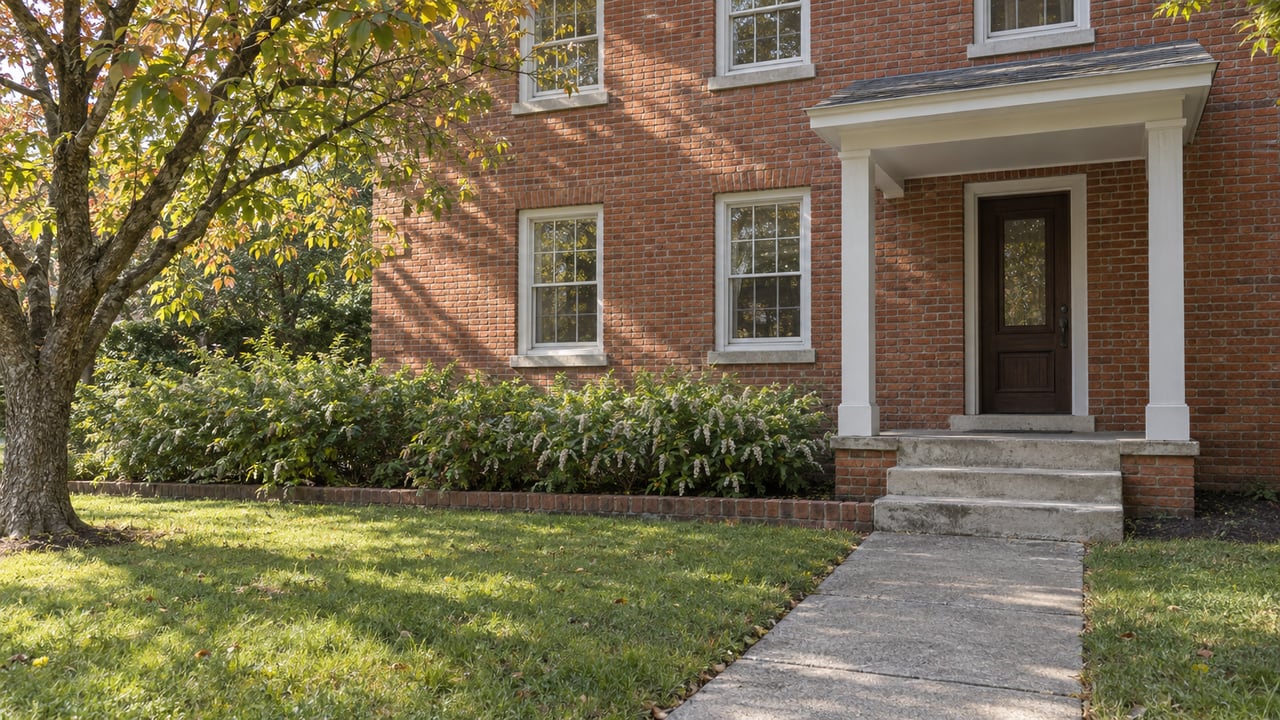
Now walk half a mile inland. Queensbury Road, Tuckerman Street, the older detached stock around Riversdale Mansion. These are 1920s to 1950s houses on modest lots, plus a handful of true Victorians and a fair number of Cape Cods. The current inventory in this pocket includes brick colonials with recent HVAC and roof updates, a 1898 restoration on Oliver Street with a chef's kitchen, and blank-canvas shells being marketed to flippers and owner-occupants willing to renovate.
The pricing here still reads more like a Prince George's County starter and move-up market than a transit-adjacent market. That is where the wide portal spread comes from. When a $275,000 shell trades in the same month as a $661,100 renovated four-bedroom on Amherst Road that closed 15% over list in February 2026, the median tells you nothing about either one.
For a buyer who wants a detached house with a yard and does not need to be inside the Kenilworth walk-shed, this is the interesting pocket. The transit lift is coming. It is not fully in the price yet, because the sales that would prove the lift are lumpy and rare, and portal medians cannot resolve them.
What this means if you are shopping Riverdale Park this summer
- Ignore the monthly median. In a market this small, one closing distorts it. Use the trailing 12 month figure and the 39-day time on market as your read on demand.
- Decide first whether you are buying transit or buying stock. Townhouse product near the future Kenilworth station is priced on transit already. Older detached stock inland is priced on the house.
- The Purple Line will open in late 2027, not next spring. If you are buying today for a 2028 commute, you have time to negotiate. If you are buying today for a 2026 commute, the MARC and Green Line are already there and are already in the price.
- Underwrite the renovation, not the promise. A 1920s detached home with original systems is a Compass Concierge candidate, not a turnkey asset. That is where value gets created in this market, and it is a different transaction than buying a 2018 townhome.
- Watch for compressed comps. Because the sample is small, appraisers will lean on College Park, Hyattsville, and University Park sales as well. Know what those comps look like before you write an offer.
FAQ
Will Purple Line construction affect a purchase closing this summer?
Around the Riverdale Park–Kenilworth site, station structural work is largely complete and crews are moving into finishing work. Expect construction traffic on Kenilworth Avenue and the Riverdale Road corridor. It is a real quality-of-life factor for showings and inspections, and it is temporary.
Is the Riverdale Park Station development the same thing as the Town of Riverdale Park?
No, and the distinction matters when you are reading listings. Riverdale Park Station is the newer mixed-use townhouse and retail development along US 1 anchored by Whole Foods. The Town of Riverdale Park is the incorporated municipality with older detached housing on a grid of tree-lined streets around Riversdale Mansion. Two different products, two different price bands.
Should I wait until the Purple Line opens to buy?
Waiting for a transit opening to buy is a bet that prices stay flat while the catalyst arrives. Historically, transit-adjacent DMV markets move earlier than that. Trailing 12-month pricing here is down about 15% from the prior period, which is a friendlier entry than most of what is coming will be.
What is a fair days-on-market expectation?
The Riverdale Park median is 39 days as of mid-2026 reporting. Well-prepared listings in the Kenilworth walk-shed and the Arts District trade faster than that. Fixer stock takes longer and often through multiple price adjustments.
If you are trying to figure out which side of that split your target house falls on, that is the exact call The Foley Group of Go Brent Realty makes for buyers every week in Riverdale Park and along the Route 1 corridor. Reach out when you are ready to price the house you actually want, not the median someone else printed.